
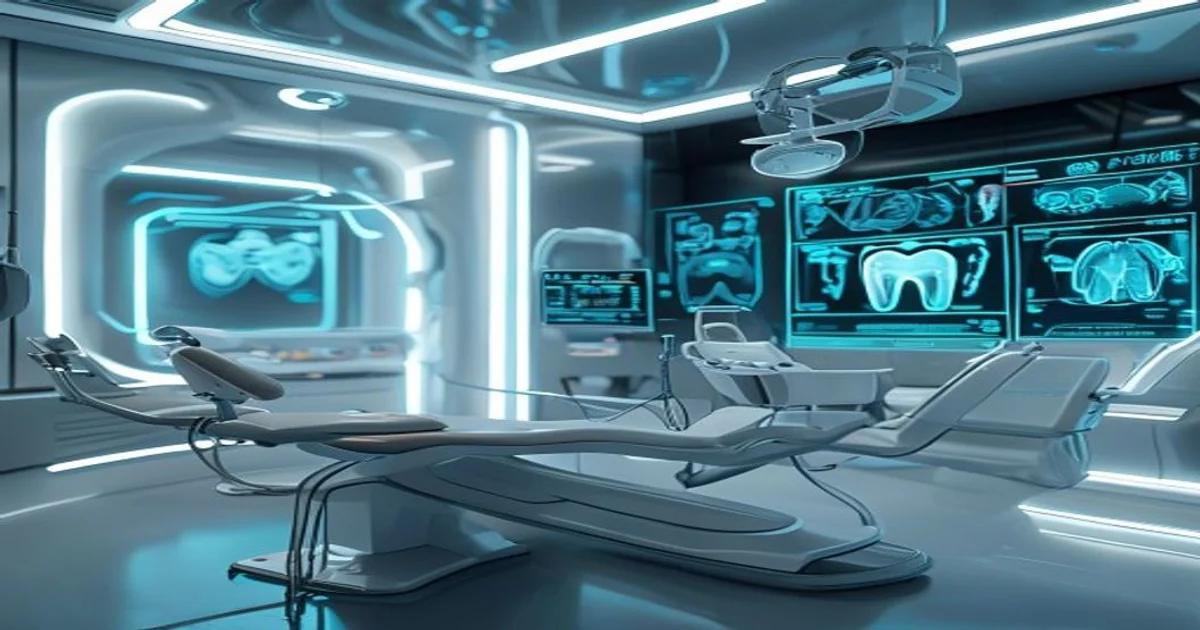
The Dawn of a New Era in Oral Healthcare
The field of dentistry stands on the cusp of a profound transformation, propelled by the relentless march of artificial intelligence (AI). Once confined to the realm of science fiction, AI is now a tangible force, reshaping every facet of oral healthcare, from the subtle nuances of diagnostics to the intricate planning of treatments and the very fabric of patient interaction. This paradigm shift promises not merely incremental improvements but a fundamental redefinition of what's possible, ushering in an era of unprecedented precision, efficiency, and truly personalized patient care. The integration of AI technologies, including machine learning, deep learning, and neural networks, is empowering dental professionals with augmented capabilities, allowing them to 'see' more, 'predict' better, and 'treat' with unparalleled accuracy. This article delves into the multifaceted ways AI is transforming dental care, highlighting its current impact and peering into the future possibilities.
AI's Diagnostic Prowess: Unveiling Hidden Insights
One of the most immediate and impactful applications of AI in dentistry lies within diagnostics. The human eye, despite its remarkable capabilities, can sometimes miss subtle indicators that AI algorithms are trained to detect with exceptional accuracy and consistency. This capability is revolutionizing how dental conditions are identified, often at their earliest and most treatable stages.
Advanced Image Analysis
AI's ability to analyze vast quantities of visual data is proving invaluable in interpreting dental imagery. From traditional two-dimensional X-rays to advanced three-dimensional Cone Beam Computed Tomography (CBCT) scans and intraoral camera images, AI algorithms can swiftly process and identify patterns that might be difficult or time-consuming for human practitioners to discern. For instance, AI-powered software can:
- Detect Caries (Cavities): AI models can analyze X-rays to identify early demineralization or carious lesions, even in areas that are challenging to visualize, improving early intervention rates.
- Identify Periodontal Disease: By analyzing bone levels and tissue structures on radiographs, AI can assist in diagnosing periodontitis, assessing its severity, and monitoring disease progression or response to treatment.
- Pinpoint Periapical Lesions: AI can accurately detect subtle changes around the root apex, indicating infections or other pathologies that might otherwise go unnoticed until more advanced stages.
- Evaluate Bone Quality and Density: Crucial for implant planning, AI algorithms can provide detailed analysis of bone structure, helping clinicians select optimal implant sites and predict success rates.
'AI's computational power allows it to identify microscopic anomalies and complex patterns in dental imagery with a speed and consistency that augments, rather than replaces, the dentist's expert eye. It's like having a tireless second opinion for every single image.'
Early Disease Detection
Beyond common conditions, AI is also making strides in the early detection of more serious diseases, such as oral cancer. By analyzing intraoral photographs and comparing them against extensive datasets of healthy and cancerous tissues, AI can flag suspicious lesions for further investigation by a dentist. This early warning system has the potential to significantly improve patient outcomes by allowing for timely biopsies and treatment, reducing morbidity and mortality rates. Furthermore, AI can assist in predicting disease progression, enabling dentists to proactively manage patient care and implement preventative strategies before conditions worsen.
Revolutionizing Treatment Planning and Execution
Once a diagnosis is made, AI continues to play a pivotal role in charting the most effective and personalized treatment course. Its capacity to analyze complex patient data, simulate outcomes, and even guide procedures is transforming the efficiency and success rates of dental interventions.
Precision Orthodontics
Orthodontics is a field where AI's predictive capabilities truly shine. AI algorithms can analyze a patient's craniofacial structure, dental arches, and malocclusions from 3D scans, predicting the precise movement of each tooth required to achieve an optimal outcome. This leads to:
- Optimized Aligner Planning: AI software designs highly accurate custom aligners, mapping out the entire treatment journey step-by-step.
- Reduced Treatment Times: By optimizing tooth movement sequences, AI can potentially shorten overall treatment duration.
- Improved Patient Compliance: Clear visualizations of predicted outcomes can enhance patient understanding and adherence to treatment protocols.
- Minimized Chair Time: More efficient planning translates to fewer adjustments and appointments.
Implantology and Restorative Dentistry
For procedures like dental implants and complex restorations, AI offers unparalleled precision. It can analyze CBCT scans to identify optimal implant placement locations, considering bone density, proximity to nerves, and occlusal forces. In restorative dentistry, AI can assist in designing crowns, bridges, and veneers that perfectly match natural tooth anatomy and aesthetics.
- Enhanced Surgical Guides: AI-generated 3D models can be used to create highly accurate surgical guides, ensuring precise implant placement and reducing the risk of complications.
- Customized Restorations: AI can recommend optimal material choices and design restorations that are functionally superior and aesthetically pleasing, often streamlining the CAD/CAM process.
- Predictive Success Rates: By analyzing various factors, AI can help predict the long-term success of restorations and implants, allowing for more informed decisions.
Surgical Guidance and Robotics
The integration of AI with robotic systems and augmented reality (AR) is ushering in an era of robot-assisted dentistry. While fully autonomous dental robots are still largely in the developmental stage, AI-powered robotic arms can assist surgeons in highly precise tasks, such as preparing cavities, performing endodontic procedures, or even assisting in intricate implant surgeries. AR overlays, driven by AI, can provide real-time guidance to dentists during complex procedures, projecting crucial anatomical information directly onto the patient's mouth, enhancing accuracy and reducing invasiveness.
Elevating Patient Experience and Preventative Care
Beyond diagnostics and treatment, AI's influence extends to redefining the patient experience, making dental care more personalized, accessible, and focused on prevention.
Personalized Patient Pathways
AI allows for the creation of highly individualized patient care plans. By analyzing a patient's historical data, lifestyle, genetic predispositions, and current oral health status, AI can generate tailored recommendations for oral hygiene, dietary advice, and preventative measures. This level of personalization moves away from a one-size-fits-all approach, leading to more effective and engaging patient care. Virtual assistants and chatbots, powered by AI, can also provide immediate answers to common patient questions, schedule appointments, and send personalized reminders, improving communication and reducing administrative burden.
Predictive Analytics for Proactive Health
Perhaps one of the most exciting aspects of AI in dentistry is its potential for predictive analytics. By identifying patterns and risk factors in vast datasets, AI can proactively alert dentists to patients who are at a higher risk of developing certain conditions, such as severe periodontal disease, rampant caries, or even systemic diseases with oral manifestations. This allows for:
- Targeted Interventions: Dentists can implement preventative strategies specifically for at-risk individuals.
- Optimized Recall Schedules: Instead of standard six-month check-ups, AI can recommend personalized recall intervals based on an individual's specific risk profile, ensuring patients receive care when they most need it.
- Early Lifestyle Adjustments: AI can highlight lifestyle factors contributing to oral health issues, empowering patients to make informed choices.
'The shift from reactive treatment to proactive, preventative care is one of AI's most significant contributions to dental health. It's about predicting the future of a patient's oral health and intervening before problems escalate.'
Operational Efficiency and Practice Management
AI isn't just for clinical applications; it's also a powerful tool for optimizing the business and operational aspects of a dental practice, freeing up staff to focus more on patient care.
Streamlining Administrative Tasks
Many administrative tasks in a dental office are repetitive and time-consuming. AI-powered software can automate these processes, including:
- Automated Scheduling: Smart systems can optimize appointment bookings, minimize no-shows through intelligent reminders, and efficiently manage cancellations.
- Billing and Insurance Verification: AI can quickly process insurance claims, verify eligibility, and identify potential billing errors, significantly reducing administrative overhead and accelerating payment cycles.
- Inventory Management: AI can track dental supplies, predict usage patterns, and automatically reorder materials, ensuring the practice is always well-stocked without excessive waste.
Data-Driven Decision Making
AI can analyze practice data to provide insights into efficiency, profitability, and patient flow. This enables practice owners and managers to make data-driven decisions regarding staffing, marketing, and service offerings. By identifying bottlenecks and areas for improvement, AI helps dental practices operate more smoothly and profitably, ultimately enhancing the overall patient experience.
The Role of AI in Dental Education and Research
AI's transformative power extends beyond current clinical and operational applications, profoundly influencing the future of dental education and accelerating groundbreaking research.
Enhanced Learning and Training
Dental students and practicing professionals can benefit immensely from AI-driven educational tools:
- Virtual Reality (VR) and Augmented Reality (AR) Simulators: AI powers realistic VR/AR simulators that allow students to practice complex procedures in a safe, controlled environment, receiving real-time feedback on their technique and decision-making.
- Personalized Learning Paths: AI can adapt educational content to an individual's learning style and progress, ensuring a more effective and engaging learning experience.
- Continuous Professional Development: AI can curate relevant research, case studies, and continuing education courses for experienced dentists, keeping them abreast of the latest advancements and techniques.
Accelerating Research and Development
In the realm of research, AI is a game-changer. Its ability to analyze massive datasets, identify correlations, and predict outcomes dramatically speeds up discovery processes:
- Drug Discovery: AI can screen vast libraries of compounds to identify potential new drugs for treating oral infections, pain, or even regenerating dental tissues.
- Material Science: AI assists in designing and testing new dental materials with enhanced durability, biocompatibility, and aesthetic properties.
- Epidemiological Insights: By analyzing large patient databases, AI can uncover trends in oral disease prevalence, risk factors, and the effectiveness of public health interventions, informing policy and preventative strategies on a global scale.
Navigating the Challenges and Ethical Landscape
While the promise of AI in dentistry is immense, its implementation is not without challenges. Addressing these concerns proactively is crucial for ensuring AI's responsible and equitable integration into dental practice.
Data Privacy and Security
Dental records contain highly sensitive patient information. The use of AI, which often relies on vast datasets, raises critical questions about data privacy, security, and consent. Robust cybersecurity measures, strict adherence to regulations like HIPAA, and transparent data governance policies are paramount to protect patient confidentiality and trust.
Algorithmic Bias and Equity
AI models are only as unbiased as the data they are trained on. If training data is skewed or unrepresentative of diverse populations, AI algorithms can inadvertently perpetuate or even amplify existing health disparities. For example, an AI trained predominantly on data from one demographic might be less accurate in diagnosing conditions in another. Ensuring diverse and inclusive datasets, coupled with continuous auditing of AI outputs, is essential to mitigate algorithmic bias and promote equitable access to high-quality dental care.
The Human Element: Dentist-AI Collaboration
There's a common misconception that AI will replace dentists. In reality, AI is an augmentative technology, designed to enhance human capabilities, not supplant them. The nuanced understanding of patient psychology, empathy, complex ethical considerations, and manual dexterity required in dentistry are uniquely human attributes that AI cannot replicate. The future lies in a collaborative model, where AI serves as an intelligent assistant, providing powerful tools and insights that empower dentists to deliver even better care.
'AI in dentistry is not about replacing the dentist; it's about equipping them with an unparalleled co-pilot. The human touch, the diagnostic intuition, and the empathetic connection remain at the heart of patient care, amplified by intelligent technology.'
The Future Horizon: A Seamless Integration
The trajectory of AI in dentistry points towards an increasingly integrated and ubiquitous presence, creating a truly 'smart' dental practice.
Augmented and Virtual Reality Integration
Expect to see AR and VR become standard tools in clinics. AR overlays during surgery could provide real-time anatomical data, nerve locations, and predicted outcomes directly into the dentist's field of vision. VR could revolutionize patient education, allowing individuals to 'walk through' their treatment plan or experience the outcome of aesthetic procedures before they happen.
Robotics and Automation Expansion
While full autonomy is distant, the role of robotics will expand. Beyond assisting in precise surgical tasks, AI-powered robots could handle repetitive lab procedures like milling crowns, printing orthodontic models, and even sterilizing instruments, further improving efficiency and reducing human error.
The Fully Connected 'Smart' Dental Practice
Imagine a dental practice where all systems—diagnostics, scheduling, treatment planning, patient records, and even inventory—are seamlessly interconnected and orchestrated by AI. This intelligent ecosystem would learn and adapt, continuously optimizing workflows, predicting equipment maintenance needs, and providing personalized, proactive care pathways for every patient. Patients could have AI-driven personal oral health dashboards, tracking their progress, offering tailored advice, and facilitating easy communication with their dental team.
Conclusion: Embracing the Intelligent Evolution of Dentistry
The advent of artificial intelligence marks a watershed moment for dental care. From enhancing diagnostic accuracy and revolutionizing treatment planning to personalizing patient experiences and streamlining practice management, AI's influence is broad and profound. While challenges related to data privacy, algorithmic bias, and ethical integration must be carefully navigated, the overwhelming consensus is that AI offers an unprecedented opportunity to elevate oral health standards globally. Dentists who embrace these intelligent technologies will find themselves at the forefront of a new era, equipped with tools that not only improve efficiency and precision but ultimately lead to superior patient outcomes and a healthier future for all. The intelligent evolution of dentistry is not just coming; it is already here, promising a brighter, more precise, and more patient-centric oral healthcare landscape.