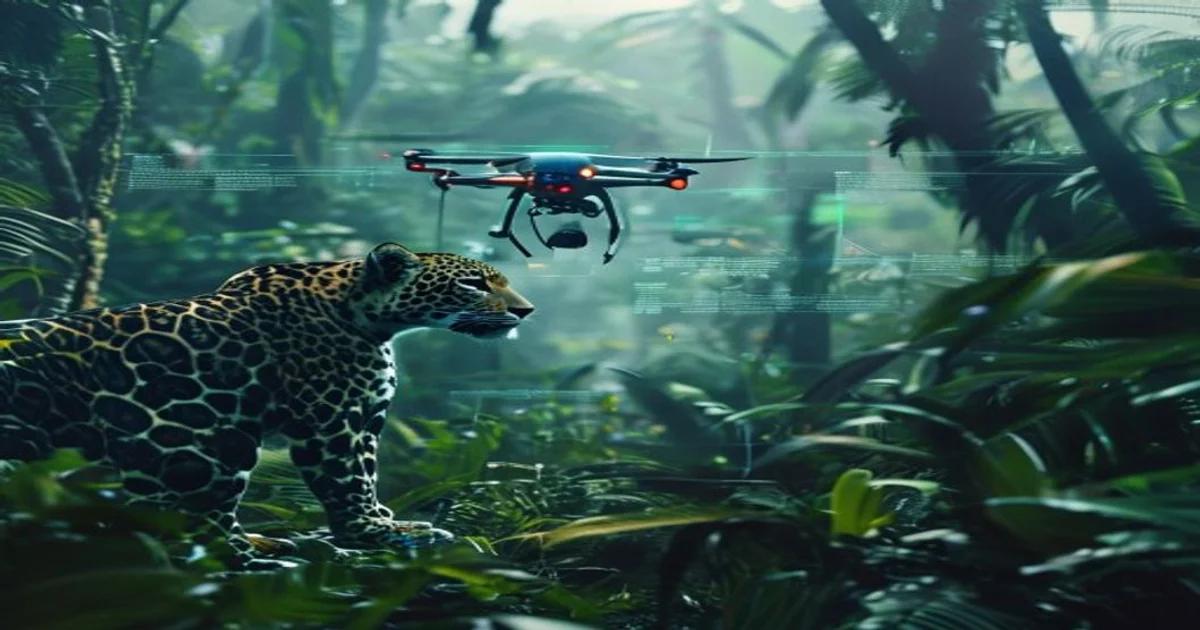
The AI Frontier: Revolutionizing Wildlife Conservation Tracking
The battle to protect Earth's biodiversity is more urgent than ever. As human expansion encroaches upon natural habitats and poaching continues to decimate endangered species, conservationists face an uphill struggle. Traditional methods, while valuable, often lack the scale, precision, and real-time responsiveness required to effectively combat these pervasive threats. Enter Artificial Intelligence (AI) – a transformative force now being harnessed to provide unprecedented capabilities in wildlife conservation tracking and protection. AI isn't just a tool; it's a paradigm shift, empowering scientists and rangers with 'eyes and ears' in the wildest, most remote corners of the planet, fundamentally reshaping our approach to safeguarding the natural world.
The Urgency of Conservation: A Looming Crisis
Our planet is experiencing a biodiversity crisis of monumental proportions. Species extinction rates are accelerating, driven primarily by habitat loss, climate change, pollution, and illegal wildlife trade. The intricate web of life, upon which all ecosystems depend, is fraying.
'Protecting wildlife isn't merely about preserving iconic species; it's about maintaining ecological balance, ensuring ecosystem services like clean air and water, and sustaining the very conditions that support human life.'
The sheer scale of the challenge – monitoring vast, often inaccessible territories, tracking elusive animals, and intercepting highly organized criminal networks – demands innovative, scalable solutions. AI, with its capacity to process immense datasets and identify complex patterns, offers a beacon of hope.
AI's Foundational Role in Modern Conservation
At its core, AI's application in conservation hinges on its ability to collect, analyze, and interpret data far beyond human capacity. This data comes from a myriad of sources: satellite imagery, drone footage, ground sensors, acoustic monitors, GPS collars, and camera traps. Machine learning algorithms, a subset of AI, are trained on this data to recognize patterns, predict behaviors, and flag anomalies that would otherwise go unnoticed.
Consider the task of identifying individual animals. For species like rhinos or elephants, their unique ear notches, tusk patterns, or skin wrinkles are like fingerprints. Traditionally, this required painstaking manual observation and comparison. Now, computer vision algorithms can automatically identify individuals from photographs or video footage, significantly speeding up population counts and individual tracking. This capability extends to identifying poachers, vehicles, or even specific types of traps from aerial or ground surveillance.
Advanced Tracking: Beyond Simple GPS
While GPS collars have been instrumental for decades, AI elevates tracking to an entirely new level. It's no longer just about knowing an animal's location; it's about understanding its behavior, predicting its movements, and anticipating threats.
Intelligent Sensor Networks
Imagine a forest floor studded with 'smart' sensors. These aren't just motion detectors; they're equipped with miniature microphones and thermal cameras, connected wirelessly to a central AI system.
- Acoustic Monitoring: AI can differentiate between natural forest sounds (wind, rain, animal calls) and unusual, threatening noises like gunshots, chainsaws, or vehicle engines. Specialized machine learning models are trained on libraries of audio signatures, allowing them to instantly classify sounds and alert rangers to potential illegal activities in real-time. Project 'SMART Parks' and initiatives utilizing platforms like 'WildTrack AI' exemplify this, turning remote acoustic data into actionable intelligence.
- Thermal and Infrared Imaging: Animals, especially nocturnal ones, are notoriously difficult to spot. Drones equipped with thermal cameras, combined with AI, can detect heat signatures from animals or humans even in dense foliage or complete darkness. AI processes these images, identifies species, and filters out false positives like hot rocks or old campfires, providing clear, actionable data for tracking and anti-poaching patrols.
- Environmental Sensors: Beyond animal tracking, AI analyzes data from environmental sensors measuring temperature, humidity, water quality, and soil composition. Changes in these parameters can indicate habitat degradation, water scarcity, or disease outbreaks, allowing conservationists to proactively intervene.
Computer Vision and Drone Surveillance
Drones are game-changers in covering vast, inaccessible areas. But manually sifting through hours of drone footage is impractical. AI automates this.
- Species Identification: AI algorithms, trained on vast image datasets, can identify specific species, count populations, and even recognize individuals from high-resolution drone imagery. This is invaluable for species like marine mammals or large terrestrial animals that inhabit open plains.
- Behavioral Analysis: By continuously monitoring animal groups, AI can detect anomalous behaviors – a sudden change in migration patterns, signs of distress, or unusual congregation – that might indicate disease, poaching pressure, or habitat disturbance.
- Poacher Detection: Drones flying autonomously or semi-autonomously can use AI to identify human intruders, vehicles, and even snares or traps. Real-time alerts are sent to ranger teams, dramatically reducing response times and increasing interdiction success rates. Platforms like 'Air Shepherd' demonstrate the power of AI-enabled drone surveillance in Africa's anti-poaching efforts.
Predictive Analytics and Machine Learning
This is where AI moves from reactive to proactive. Machine learning models analyze historical data to predict future events.
- Poaching Hotspot Prediction: By analyzing past poaching incidents, weather patterns, lunar cycles, road networks, human population centers, and topography, AI can predict 'hotspots' – areas and times most vulnerable to poaching. This allows conservation resources to be deployed strategically and pre-emptively.
- Migration Pattern Prediction: Understanding animal migration is critical for establishing protected corridors and managing human-wildlife conflict. AI models can predict migration routes based on environmental factors, historical data, and real-time animal movements, helping to inform land-use planning and conservation policy.
- Disease Outbreak Forecasting: By integrating data on animal health, environmental conditions, and population density, AI can forecast potential disease outbreaks, enabling early intervention and preventing widespread epidemics that could devastate vulnerable populations.
Case Studies and Real-World Impact
AI isn't a theoretical concept in conservation; it's already making a tangible difference worldwide.
- Rhino Protection in Africa: Projects like 'Wild Me' and initiatives in Kruger National Park use AI-powered camera traps and drone surveillance to monitor rhino populations and identify poachers. By leveraging facial recognition for rhinos (based on ear notches and horn patterns) and combining it with predictive analytics, conservationists can track individuals and deploy patrols to high-risk zones, significantly reducing poaching incidents.
- Whale Conservation: In marine environments, AI analyzes acoustic data from hydrophones to detect whale calls, identify species, and track their movements without invasive tagging. This helps inform shipping routes to prevent collisions and identify critical feeding or breeding grounds for protection. Google's 'Project CETI' aims to decode sperm whale communication using advanced machine learning, offering unprecedented insights into marine life.
- Forest Monitoring in the Amazon: AI analyzes satellite imagery from platforms like 'Global Forest Watch' to detect illegal deforestation in near real-time. Machine learning algorithms distinguish between natural forest cover changes and human-caused clearing and alert authorities to illegal logging operations swiftly.
- Elephant Tracking in Southeast Asia: AI-driven platforms like 'EarthRanger' integrate various data streams – GPS collar data, ranger patrol logs, and sensor alerts – to provide a unified operational picture for protecting elephants from poaching and human-wildlife conflict. It helps predict where elephants might move into human settlements, allowing for preventative measures.
The Ethical Imperative and Challenges
While AI offers immense promise, its deployment in conservation is not without ethical considerations and challenges.
Data Privacy and Surveillance
The same technologies used to track animals can also be used to monitor human activity. Ensuring that surveillance technologies are used solely for conservation purposes, with transparency and accountability, is paramount. Building trust with local communities, who might feel targeted by surveillance, is crucial for long-term project success. Clear policies on data collection, storage, and usage must be established.
Bias in Algorithms
AI models are only as good as the data they're trained on. If training data is biased or incomplete, the AI's predictions or identifications can be flawed. For example, if an AI is primarily trained on images of a certain species in one environment, its performance might degrade when deployed to a new location with different environmental characteristics or subtly different sub-species. Continuous validation and diverse datasets are essential.
Resource Intensiveness and Accessibility
Developing and deploying sophisticated AI solutions requires significant financial investment, technical expertise, and computational resources. This can create a 'digital divide' where well-funded organizations in certain regions benefit disproportionately, while other critical conservation areas remain underserved. Efforts must be made to create accessible, affordable, and easily deployable AI tools for a global conservation community.
The 'Black Box' Problem
Some advanced AI models, particularly deep neural networks, can be complex 'black boxes' where it's difficult to understand precisely *why* they made a certain prediction or classification. In conservation, where decisions can have life-or-death consequences for animals, understanding the rationale behind AI's recommendations is vital for building trust and ensuring responsible action. Research into explainable AI (XAI) is addressing this.
Human-AI Collaboration
AI is a powerful assistant, not a replacement for human expertise. Rangers, field scientists, and local communities possess invaluable knowledge that AI cannot replicate. The most effective conservation strategies will involve seamless collaboration between human intelligence and artificial intelligence, where AI handles data processing and pattern recognition, freeing humans to focus on nuanced decision-making, direct intervention, and community engagement.
The Future of AI in Wildlife Conservation Tracking
The trajectory of AI in conservation is one of rapid innovation and increasing sophistication.
- Hyper-Personalized Tracking: Future AI systems could offer even more granular insights into individual animals, predicting specific behaviors, identifying health issues before they manifest, and even assessing stress levels through physiological data analysis.
- Autonomous Conservation Systems: Imagine autonomous drone swarms that patrol vast areas, using AI to identify threats, report back, and even deploy non-lethal deterrents to protect wildlife, all while operating with minimal human oversight in predefined safe zones.
- Genomic AI: AI will play an increasingly vital role in analyzing genomic data to understand genetic diversity, identify vulnerable populations, and guide breeding programs for endangered species, offering insights into evolutionary health and adaptability.
- Global Data Integration: A truly interconnected global network of conservation data, powered by AI, could allow for real-time monitoring of global biodiversity trends, rapid response to emerging threats, and unprecedented opportunities for collaborative research and action across continents.
- Citizen Science Integration: AI tools that are user-friendly can empower citizen scientists to contribute vast amounts of data, from camera trap images to species sightings, which AI can then process and integrate into larger conservation efforts, democratizing participation.
- Ethical AI Frameworks: As AI becomes more ubiquitous, there will be a greater emphasis on developing robust ethical AI frameworks specifically tailored for conservation, ensuring responsible innovation and deployment that respects both wildlife and human communities.
Conclusion: A Smarter Approach to Saving Our Planet
Artificial intelligence is transforming wildlife conservation from a reactive, labor-intensive endeavor into a proactive, data-driven science. By providing advanced tracking capabilities, enabling predictive analytics, and automating surveillance, AI offers conservationists a powerful arsenal in the fight against extinction. It's not a silver bullet, but rather a force multiplier, amplifying human efforts and providing insights previously unattainable.
However, the true potential of AI in conservation will only be realized through careful, ethical deployment, robust scientific validation, and a commitment to collaborative frameworks that bridge technological innovation with local knowledge and community engagement. As we look to the future, AI stands as a critical ally, helping us to not only track and protect the world's magnificent wildlife but to foster a deeper understanding and appreciation for the delicate ecosystems upon which all life depends. The intelligent machines are joining the ranks of conservation heroes, offering a smarter, more hopeful path toward a thriving planet.